Part 5: A high-speed escape uncovers shocking secrets of futuristic notebooks, maternal clones, and a non-human child delivering a terrifying ultimatum
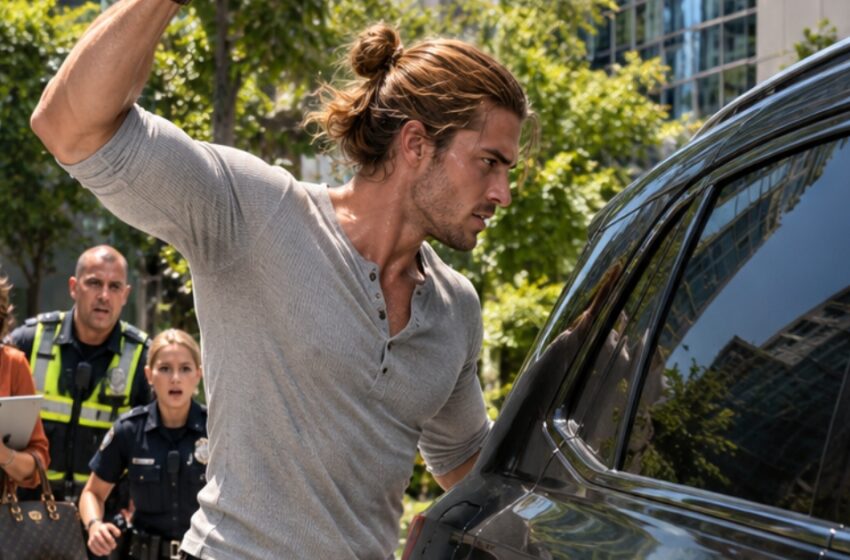
The engine roared as the sedan launched forward like a missile, the digital speedometer climbing past seventy. I grabbed the dashboard, my muscles locking as the heavy steel barricade rushed toward us. The woman with the scar yanked frantically at the steering wheel, but the column remained dead, locked in a tight, unyielding grip by the vehicle’s overridden computer.
«Throw it out!» she screamed, her boot stomping the brake pedal with all her weight, but the brakes were entirely unresponsive. «Throw the drive!»
I hauled back my arm and hurled the small digital drive through the shattered passenger window. It skipped off the concrete barrier and exploded into a spark of blue static. Instantly, the dashboard screen flickered, the synthesized countdown cutting out at two, and the sedan’s mechanical controls slammed back into human hands.
She wrenched the wheel hard to the left. The tires shrieked, laying down thick ribbons of burning rubber as the sedan skimmed the barricade with a violent metallic screech, knocking off the side mirror before veering back into an open lane of traffic.
I let out a breath I hadn’t realized I was holding, my pulse hammering in my throat. I looked down at the leather-bound notebook still gripped tightly in my left hand.
«How is this possible?» I whispered, staring at the precise, slanted cursive on the yellowed page. It was my handwriting. Every loop on the letters, every unique slant on the ts matched my penmanship perfectly. But the date clearly read three years into the future. «I didn’t write this.»
«You haven’t written it yet,» she corrected, her voice tight as she cut through an alleyway to clear the main thoroughfare. Her eyes darted continuously between the mirrors. «Your mother spent four years trying to stop you from ever putting pen to paper.»
She pulled the car behind an abandoned textile warehouse, cutting the engine. Silence rushed into the cab, heavy and suffocating.
«My mother is dead,» I said, my voice shaking with rising fury. «She died in a car crash when I was twelve.»
The woman turned to face me. Up close, the jagged scar across her jawline looked precise, almost surgical. She reached up, unzipped the collar of her jacket, and pulled down her shirt just enough to reveal a silver identification tag pinned directly to her collarbone.
Engraved on the tag was the same six-digit sequence as my birth date—and beneath it, a name: PROJECT JANUS.
«Your mother didn’t die in a crash,» she said flatly. «She staged it to get you off the grid. And the woman you saw in the metro station today isn’t your mother. She’s a clone created to retrieve the notebook before you could read the second page.»
I stared at her, the absurdity of the words clashing violently with the cold reality of the blood on my hands and the bullet-riddled cars behind us. I looked back down at the open notebook. With trembling fingers, I turned to the second page.
There were no long paragraphs or cryptic notes. Just a single drawn diagram of an intricate circuit board, accompanied by three short lines of text:
The child is not human. The drive is not data. They are listening through your eyes.
A cold chill ran down my spine. I lifted my head and looked directly into the woman’s ice-blue eyes. «What does that mean?»
Before she could answer, her expression shifted from stern intensity to sheer horror. She wasn’t looking at my face—she was looking past my pupils, staring directly into my irises.
«Your eyes,» she whispered, her hand moving slowly toward her belt. «Your pupils aren’t dilating.»
I blinked rapidly, reaching up to touch my eyelid. A faint, imperceptible buzz vibrated behind my optic nerve—a microscopic, high-frequency hum that had been hovering at the edge of my hearing all morning.
«What are you talking about?» I asked, backing against the passenger door.
«The pulse from the red SUV… it wasn’t an explosive,» she said, her voice dropping to a trembling breath as she drew her handgun once more, leveling it directly at my chest. «It was an activation signal. You were in the room when the case opened.»
A heavy thud echoed from the trunk of our sedan.
The woman froze. I held my breath.
A second thud rattled the rear seat frame, followed by the wet, rhythmic sound of something sliding across the carpeted lining of the trunk.
«Did you check the trunk before you picked me up?» I asked softly, my chest heaving.
«The trunk was empty,» she whispered, her knuckles turning white around the grip of the pistol. «I checked it two minutes before I rammed the cruiser.»
A sharp, metallic click echoed from directly behind my headrest.
Slowly, the leather back seat split down the middle, folding forward on its own hinges. From the darkness of the trunk, two tiny, pale hands reached through the gap, holding a heavy chrome cylinder that hummed with a faint blue light.
It was the infant from the video feed. Its wide, unblinking eyes fixed entirely on me, and its lips parted to emit a clear, synthesized human voice.
«Subject identified,» the baby spoke, its tone perfectly monotonous. «Initiating memory wipe.»